
The European Union HQ has established firm ESG (Environmental, Social, and Governance) goals it expects businesses to meet. These goals aim to align business strategies across the European Union and increase commitment to sustainability and ethical practices.
To meet these ESG goals, some European businesses are putting pressure on their UK subsidiaries to upgrade to full-electric, sustainable heating systems, such as heat-pumps. However, the reality of UK grid connection queues means that electric heating might not be the most sustainable solution at present. In fact, gas heating can be the better investment currently in some cases.
What is ESG?
ESG stands for Environmental, Social, and Governance. ESG began as a requirement for financial reporting, but is now regularly applied when it comes to investment and business analysis.
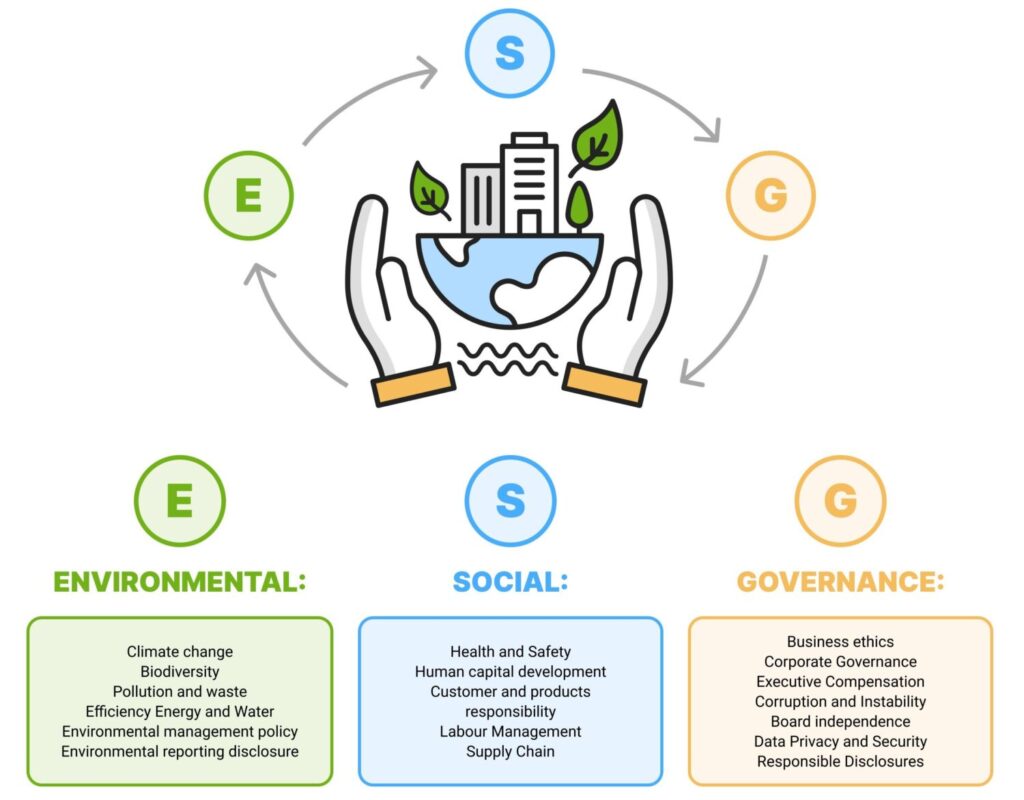
Whilst there isn’t yet an official, agreed-upon definition of precisely what ESG entails, it generally means to use these three factors – environmental, social, governance – to assess how sustainable companies and countries are.
- Environmental: A company’s impact on the planet, focusing on areas such as carbon emissions, waste management, energy efficiency, and pollution.
- Social: Looks at how a company treats its staff, customers, and communities, and its standards for workplace safety, fair employment, material sourcing, supply chains, etc.
- Governance: Assesses a company’s management quality, including diversity, gender equality, shareholder treatment, employee pay, business ethics, and more.
How the UK grid impacts net zero strategies
The non-financial metrics that quantify ESG are often used by investors, consumers, and business regulators to assess the performance and potential of a company. However, for UK subsidiaries of European firms, the reality of the UK grid and kVA capacity limits can be a huge problem for managing expectations. This can also be an issue when outlining net zero strategies that focus on moving towards an “electric-only” future.
kVA capacity
Every business in the UK is allocated a certain amount of power, known as kVA (kilo-volt-amperes). Businesses are charged monthly for their kVA threshold – also known as a “capacity charge” – which must be paid in full, even if the full capacity hasn’t been used.
To avoid wasting money and energy resources, kVA should be relative to the amount of electricity typically used by a business. This can quickly become an issue when a company is asked to move towards an “electric-only” mandate – thereby increasing their kVA capacity.
UK grid connection issues
The European ESG focus on a fully decarbonised power supply is huge step in the right direction for net zero strategies. However, it is not currently possible in the UK on a mass scale because the grid network just cannot keep up.
If European firms pressure their UK subsidiaries to make the switch to fully electric heating, there are several reasons this might not be possible currently:
- Local grid constraints: Although renewable energy generation is growing, local grids are held up by long wait times for electricity substation upgrades.
- kVA capacity limit: In order to move towards electric-only heating, many businesses need to increase their kVA capacity so they can draw more electricity from the grid – as drawing over your agreed threshold can potentially cause huge damage to the grid infrastructure.
- Grid connection queues: The delay on substation upgrades and increase in net zero strategies are subsequently causing huge queues for businesses trying to connect to the grid. These queues can last from several months to years.
How gas heating can solve the issue
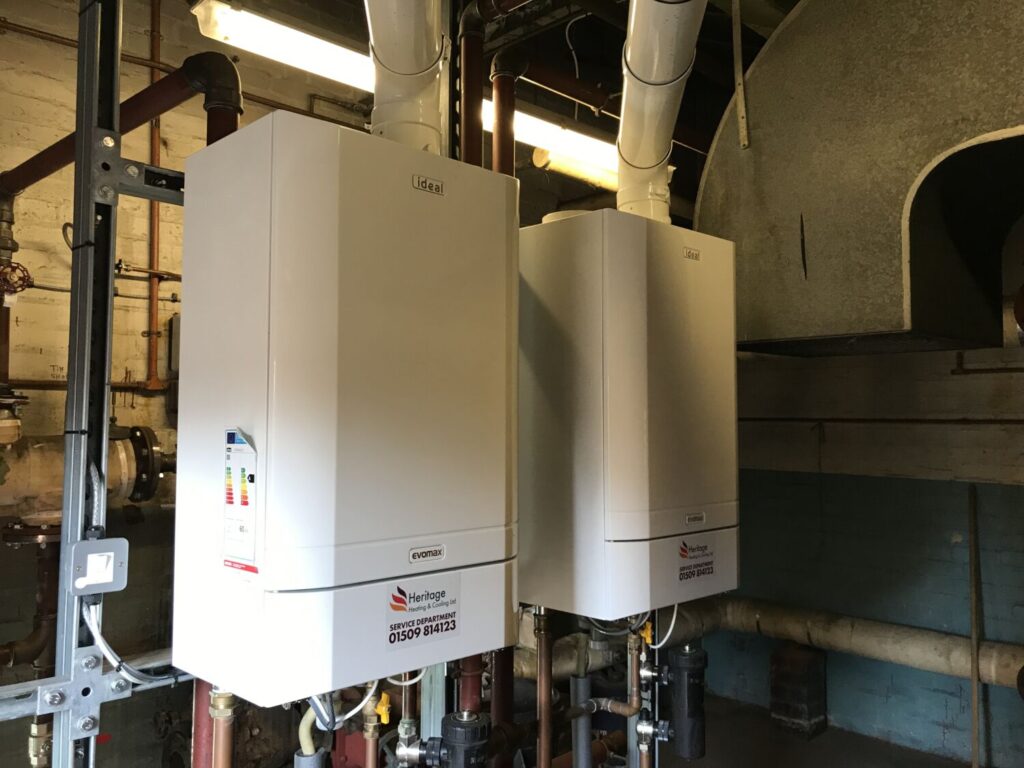
Whilst the UK constructs the grid infrastructure needed to provide all businesses with low-carbon energy, a better solution for companies focused on net zero is to bridge the gap until this happens. Modern gas boilers and heating solutions can be the best way to do this – especially for large commercial buildings like warehouses.
1. Energy efficient
The UK government scrapped the proposed 2035 ban on the sale of new gas boilers. Whilst older gas boilers still rightly have a bad reputation for contributing to greenhouse gases, modern gas heating systems are designed to be highly energy efficient. They can have:
- Modulating burners that adjust their output to match current heating demand, reducing fuel consumption.
- Smart controls and thermostats that allow for highly precise temperature regulation, automatically optimised heating schedules, and remote heating control.
- Condensing technology that recovers heat lost from exhaust gases to reduce energy wastage and further increase efficiency ratings.
2. Long lifespan
Gas boilers have always been relied upon for their longevity and reliability. If a boiler is serviced and maintained regularly by qualified industrial heating specialists – like Heritage – it should run efficiently for up to 20 years.
3. Cheaper to run
New gas heating systems are very effective at efficiently heating large commercial spaces like warehouses and factories. This means that, currently, some gas heating systems are in fact cheaper to run than electric heating. Regular maintenance should see your system last for around 20 years – enough time for your business to plan its transition to other heating methods whilst UK grid infrastructure improves.
Struggling to balance European ESG targets with UK grid realities? We don’t just fit systems, we assess your current kVA capacity, energy usage, and building layout. Let us help you present a viable, compliant, and cost-effective heating roadmap to your parent company.