
Key points summary
- The challenge: Switching to electric heat pumps in large commercial buildings often leads to heat loss.
- The solution: Destratification fans push down warm air from the ceiling, recovering lost heat.
- The benefit: Installing destratification fans alongside a heat pump in a large commercial building improves efficiency and recovers lost heat – saving money on energy and helping to make net zero strategies possible.
An increasing number of UK businesses are devising net zero strategies to mitigate their contribution to climate change. For businesses that operate from large commercial buildings – like factories and warehouses – choosing a heating system has a huge impact on energy usage.
The move towards ‘electric only heating’
Whilst gas heating remains a viable investment for UK businesses in the near future, more and more companies are heading towards electric heating only.
Heat pumps are an increasingly popular commercial solution for businesses following net zero strategies. This is for several reasons:
- High energy efficiency: Heat pumps can deliver up to five times more energy than they consume, making them highly efficient.
- Renewable-ready: Because heat pumps run only on electricity rather than fossil fuels, they integrate easily with new, renewable energy grids.
- Zero-emissions onsite: Heat pumps use electricity to transfer free heat from outside into a building, emitting no carbon dioxide or other pollutants into the surrounding air.
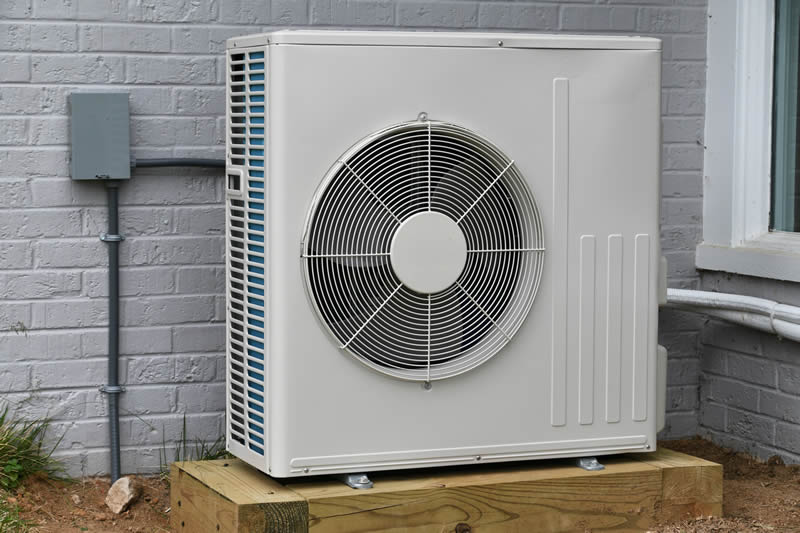
Heat pumps and large commercial buildings
Although businesses are being encouraged to make the switch to electric only heating sources, the reality is it can be very difficult to efficiently heat large commercial buildings with heat pumps.
1. Lower temperatures
Heat pumps, especially in large buildings, are not always able to reach the high temperatures we’re used to getting with gas boilers. Gas systems are generally able to achieve water temperatures of 70°C and above; whilst heat pumps typically cap off at around 55°C.
This means, in some cases, additional units or alternative heating systems are required to supplement a heat pump – driving up costs and reducing the potential environmental benefits.
2. Grid connection
Installing a heat pump means a business is going to use more electricity, but significantly reduce reliance on fossil fuels – which is great for net zero. However, for UK businesses that need to increase their electricity threshold in order to run a heat pump, the process can be seriously impeded by local grid connections.
The current grid is not sufficient to support the number of businesses trying to make the switch to electric only heating. Whilst improvements are being made to the network, the speed at which this is happening is slower than demand for electricity is increasing; the UK is already experiencing long grid connection queues, with some businesses having to wait as much as a year before they can increase their electricity threshold.
3. Space and cost
Heat pumps require a fairly large amount of space compared to compact gas boilers, and often need additional infrastructure (outdoor units, storage tanks, etc.).
There is also no getting around the fact that the initial installation cost of heat pumps is higher than traditional heating systems. In the long-term, a heat pump should save a business money on energy bills and help achieve net zero – but it can be a slow ROI.
How destratification fans can address heat pump issues
Installing destratification fans is an efficient, energy-saving way for businesses operating out of large buildings to reduce their energy costs. Alongside this, destratification fans can offset the potential issues of achieving net zero with a heat pump.
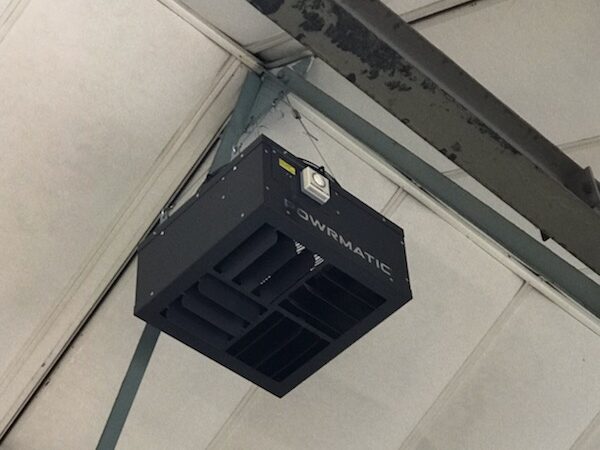
At Heritage Heating and Cooling, we recommend installing destratification fans alongside a heating system for almost 90% of our clients – because the results speak for themselves.
1. Recover lost heat
Destratification fans are installed in the ceilings of large buildings, recovering lost heat and reducing the need to run heating unnecessarily to cover this.
2. Huge energy reductions
This heat redistribution increases heating efficiency, easily reducing a building’s energy usage by as much as 15% or more. Cost-effective energy usage can also significantly improve your building’s EPC rating.
3. Quick return on investment (ROI)
Whilst heat pumps are notorious for providing a slow ROI, the implementation of destratification fans alongside a heat pump can change this. These fans have an extremely low operational electricity consumption, and the overhead costs of installing destratification fans usually pay for themselves through energy bill savings after just one or two seasons of use.